
Honey (shahad) benefits: what raw honey really does for you
By the Sook ul Zahra team · · 6 min read
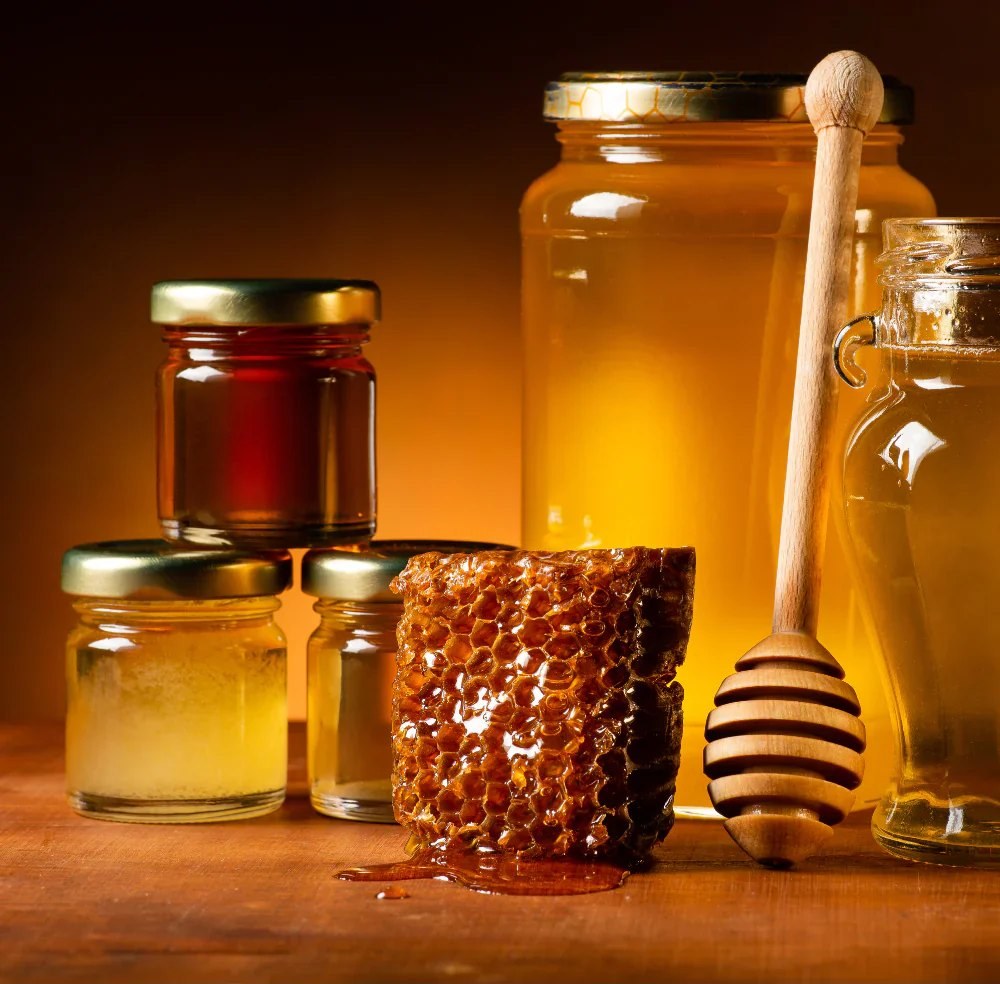
Shahad has been part of Pakistani kitchens for generations: stirred into warm water in the morning, given to children with a cough, or spread on a hot paratha. It is even praised in the Quran, which describes the drink that comes from bees as containing healing for people (Surah An-Nahl, 16:69).
But what does honey actually do for your health, and what is just wishful thinking? Here is an honest look at the benefits of honey, the limits, and how to get the most from it.
What makes raw honey different
Honey is mostly natural sugars (fructose and glucose) and water, with small amounts of enzymes, amino acids, minerals and plant compounds called polyphenols that come from the flowers bees visit. Many of these delicate compounds are reduced when honey is heated for bottling. That is why raw honey, which is only strained and never heated, keeps more of its aroma and character.
1. It soothes coughs and sore throats
This is the best-studied benefit. A Cochrane review of six trials in children aged 12 months to 18 years found that honey probably reduces cough frequency better than no treatment or a placebo (moderate-certainty evidence), for up to three days of use. For adults the evidence is thinner: the NHS lists hot lemon and honey as a home remedy but says the evidence that it helps is limited. Many people also find a spoonful soothing on a sore throat. See honey for cough and sore throat for the full picture.
2. It is a better-tasting swap for white sugar
Honey is sweeter than table sugar, so many people find they use less of it. It also brings flavour: floral lavender honey, herbal ajwain honey or mild clover honey add taste that plain sugar cannot. The benefit only counts if honey replaces sugar in your diet rather than being added on top.
3. Quick, natural energy
Because its sugars are absorbed quickly, a teaspoon of honey gives fast energy, which is why it is popular before exercise, during long days, or at sehri and iftar in Ramadan alongside dates and water.
4. Antioxidants from the flowers
Honey contains polyphenols and other antioxidants. The amount varies with the flower, and darker honeys generally contain more. These amounts are small compared with fruit and vegetables, so think of them as a bonus rather than a reason to eat more honey.
5. Natural antibacterial properties
Honey is naturally acidic, low in moisture and produces tiny amounts of hydrogen peroxide, which is why it resists spoiling and has been studied for wound care. Hospitals use specially sterilised medical-grade honey for this. Do not put kitchen honey on wounds without medical advice.
Shahad ke fayde at a glance
| Benefit | How strong is the evidence? | Best way to use it |
|---|---|---|
| Cough and sore throat relief | Moderate in children, limited in adults | A teaspoon on its own or in warm (not boiling) water |
| Replacing refined sugar | Practical | In tea, yoghurt, dressings and desserts |
| Quick energy | Good | Before exercise or at sehri |
| Antioxidants | Modest | Choose raw, unheated honey |
| Wound care | Medical-grade only | Only under medical supervision |
Who should be careful with honey
- Babies under 12 months: never give honey, not even a taste on a pacifier. It can cause infant botulism.
- People with diabetes: honey raises blood sugar like other sugars. Ask your doctor before including it.
- Allergies: anyone allergic to pollen or bee products should avoid honey or check with a doctor.
How to get the most from your honey
- Stick to one or two teaspoons a day.
- Let tea or milk cool slightly before adding honey. Boiling liquid dulls its aroma.
- Store it closed, at room temperature, with a dry spoon.
- Choose honey that is raw and sold by its floral source. Our guide to checking pure honey explains what to look for.
This article is general information and not medical advice. Speak to a doctor about any health condition.